Need help with pricing, lead time, customization, compliance, or order concerns? Leave your details and our management team will contact you directly.

RFID Laundry Tags Explained: How Industrial Textile Tracking Works
The linen problem nobody should call “minor”
Start with money.
In healthcare and hospitality, linen is still treated like background inventory, even though every missing sheet, over-washed scrub top, and misrouted towel becomes a compound cost: replacement spend, labor waste, delayed turns, stock padding, and usually one more angry meeting about “shrink” that nobody can localize. Why do so many operators still act as if a clipboard and a weekly count are serious controls?
Table of Contents
I think the industry hides behind the softness of the product. Cloth looks low-tech, so executives assume the process is low-risk. That is lazy thinking. The CDC’s laundry and bedding guidance states that heavily contaminated textiles can carry bacterial loads of 10^6–10^8 CFU per 100 cm², and mishandling soiled linen can create exposure through direct contact or contaminated lint aerosols. This is not just a cost leak. It is a workflow and hygiene problem.
RFID is not magic.
It is item identity, event capture, and accountability bound together in one system, and when people say “RFID laundry tags” as if the tag alone does the work, I usually assume they have not looked closely enough at the readers, the software rules, or the operational choke points where value is either created or quietly murdered.
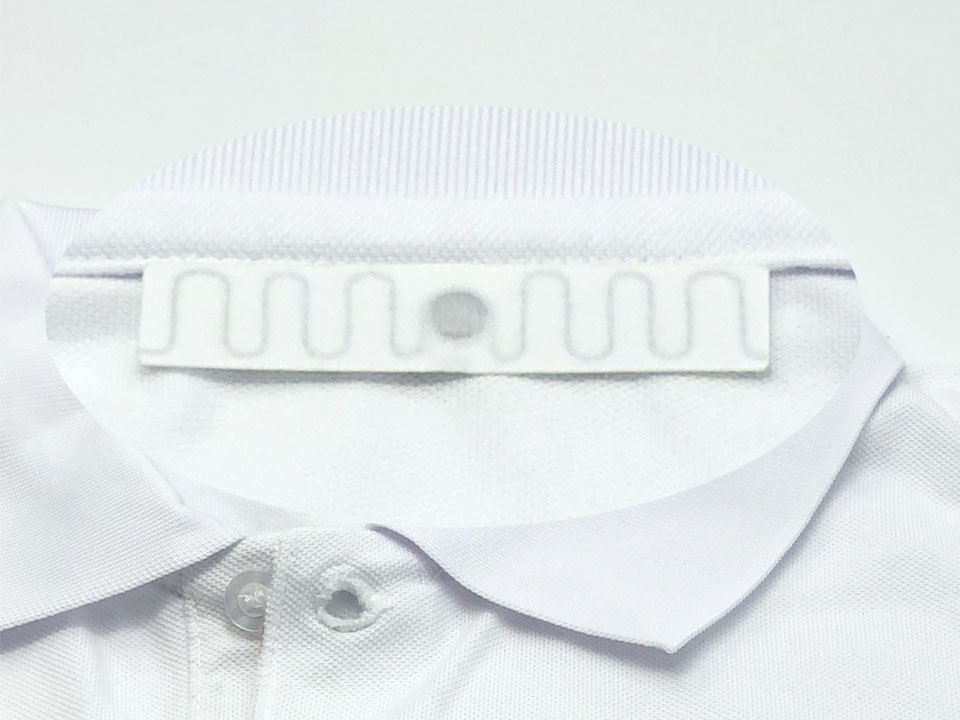
What RFID laundry tags actually are
Tags, readers, and software — three layers, not one
A modern industrial textile tracking stack is usually based on passive UHF RAIN RFID, not the close-range NFC experience people know from cards and phones. GS1 says RAIN uses the GS1 UHF Gen2 protocol standardized as ISO/IEC 18000-63, while the RAIN Alliance and Impinj describe these systems as standards-based passive UHF deployments operating in the 860–960 MHz range. Impinj also notes that RAIN readers can read many items quickly, up to 1,000 tagged objects per second in suitable conditions, without line-of-sight.
That difference matters.
Consumer NFC is built for very short range, usually a few centimeters, and one-item interactions. Industrial laundry tracking is built for carts, bundles, cabinets, conveyors, portals, docks, and batch validation. In blunt terms: tap-to-pay logic is human-centric; RAIN RFID is throughput-centric. That is why comparing a hospital linen room to a smartphone scan is usually a waste of everybody’s time.
How the wash-cycle data should move
Here is the simple version I trust:
| Wash-cycle stage | Typical hardware | Data that matters | Common failure |
|---|---|---|---|
| Soiled collection | Handheld, cart reader, portal | Item ID, source location, timestamp, cart/batch ID | No source mapping |
| Laundry intake | Portal, gantry, conveyor read point | Arrival confirmation, count variance, exception list | Assuming count = process control |
| Washing / finishing | Process-linked event, station read | Cycle assignment, missed reads, rewash status | No exception handling |
| Packing / dispatch | Table reader, portal, cabinet | Destination, shipment validation, proof of pack | No reconciliation against order |
| Return / storage / use | Handheld, smart cabinet, room inventory | Par levels, turns, age, hoarding, loss trends | No replenishment rules |
That table is a synthesis, but it tracks closely with real deployments. Royal Jersey Laundry’s 2024 case used readers at the laundry and hotel sites, capturing items through soiled intake, pre-wash conveyor loading, order preparation, shipping validation, and hotel receiving; Einstein Hospital in São Paulo used item-level RFID plus software to track use, laundering, and replenishment through 150 cabinets across an 800-bed facility.
And here is the hard truth I wish more buyers heard early: the tag is rarely the weak link. The weak link is usually undefined read events, poor exception logic, or software that collects IDs but cannot answer a manager’s first real question—where exactly did the item disappear, stall, or get overused?
The raw data that makes this worth doing
Brazil: 158,000 linens, 150 cabinets, about $300,000 a year
In Brazilian Hospital Tracks 158,000 Linens with RFID, RFID Journal reported that Hospital Israelita Albert Einstein was managing about 158,000 linen items across roughly 35 categories, replenishing 150 linen cabinets four times per day in an 800-bed, 273,000-square-meter operation. The hospital began analyzing RFID results in the second half of 2022 and the system was reported as saving about $300,000 yearly while tracking movement between patient use, outsourced laundering, and cabinet return. That is not hype copy; that is what item visibility looks like when inventory scale stops being theoretical.
London: 550,000 pieces a week, 40 tons a day
In RFID Helps Laundry Serve London’s Five Star Hotels, Royal Jersey Laundry described a 25,000-square-foot, 24/7 operation processing about 550,000 pieces per week, or roughly 40 tons per day. The deployment used UHF laundry tags, fixed and handheld readers, and cloud software integrated with Sage accounting; Royal Jersey said the system improved efficiency, cut manual work, improved delivery accuracy, and had already paid for itself. That last part matters more than most glossy brochures: integration into finance and proof-of-delivery is where RFID stops being a pilot toy.
Portugal: less laundering, less buying, less staff gaming the system
The 2024 report Portuguese Hospital Raises Efficiency of Linens, Uniforms Management with RFID is the one I would force skeptical procurement teams to read. Centro Hospitalar de Entre Douro e Vouga reported a 15% reduction in laundering, more than a 50% cut in new-product ordering, and expected ROI in less than two years. The article also described one employee hoarding 50 uniforms in a locker, which is exactly the kind of human behavior that manual systems miss and executives pretend does not exist until a dashboard embarrasses them.
So yes, RFID saves labor. But the deeper value is uglier and more interesting: it exposes hidden demand, stockpiling, misuse, excess washing, and false par assumptions. That is where the money actually leaks.
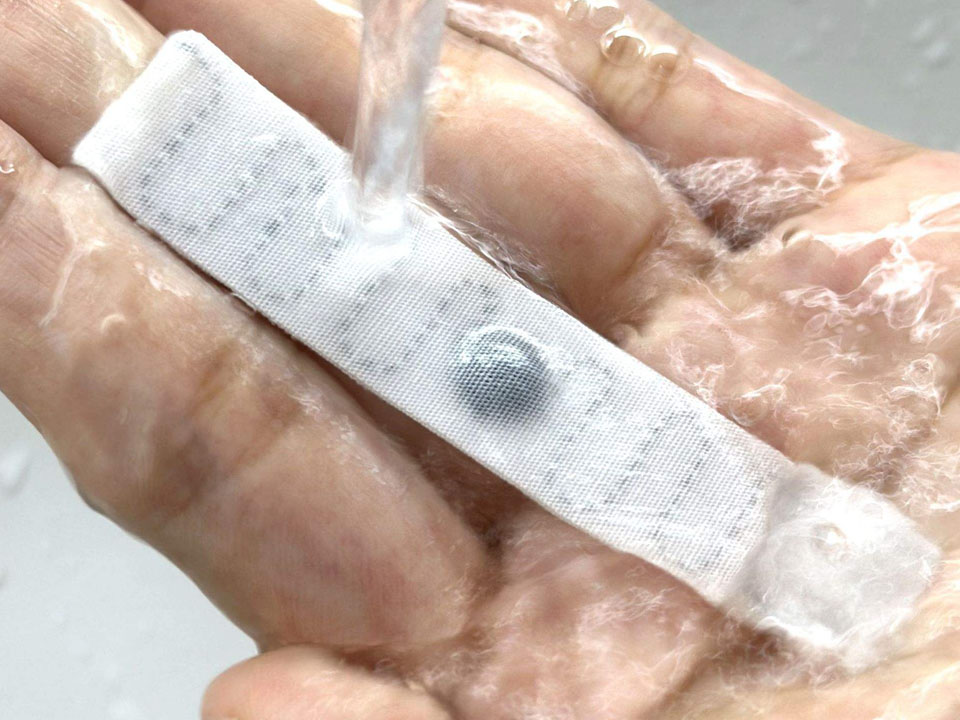
Why industrial textile tracking is different from consumer RFID
The phrase “RFID” causes more confusion than it should.
GS1 defines RAIN RFID as passive UHF RFID tied to GS1 UHF Gen2 / ISO/IEC 18000-63, while GS1’s NFC guidance explains that NFC is HF RFID at 13.56 MHz with a reading distance below 10 cm. Impinj draws the operational line even more clearly: NFC is close-range, one-item, consumer-style interaction; RAIN is multi-item, non-line-of-sight, operational visibility at scale. So when someone asks whether a laundry room really needs RFID “instead of something like NFC,” the answer is simple: they solve different problems.
I will say this bluntly.
If your use case is bulk inventory, wash-cycle tracking, portal validation, and proof of movement across laundry, storage, and customer sites, then consumer analogies are not just wrong; they are actively misleading. NFC reads a tap. Industrial textile tracking reads a flow.
Not all washable RFID tags are equal
The tag form factor should match the textile and the abuse
Your own catalog already hints at the right buying logic. The main RFID laundry tags page splits the field into textile, dual-frequency, silicone, and PPS formats, which is exactly how a practical buyer should think: not “Which tag is best?” but “Which construction survives this garment, this attachment method, this chemistry, and this read environment?”
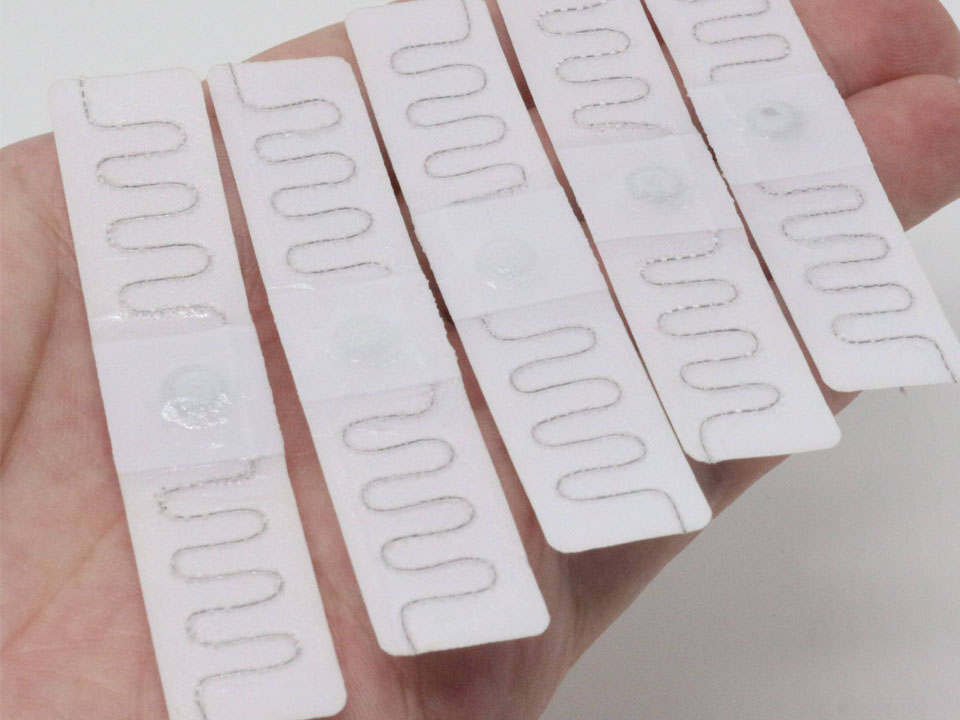
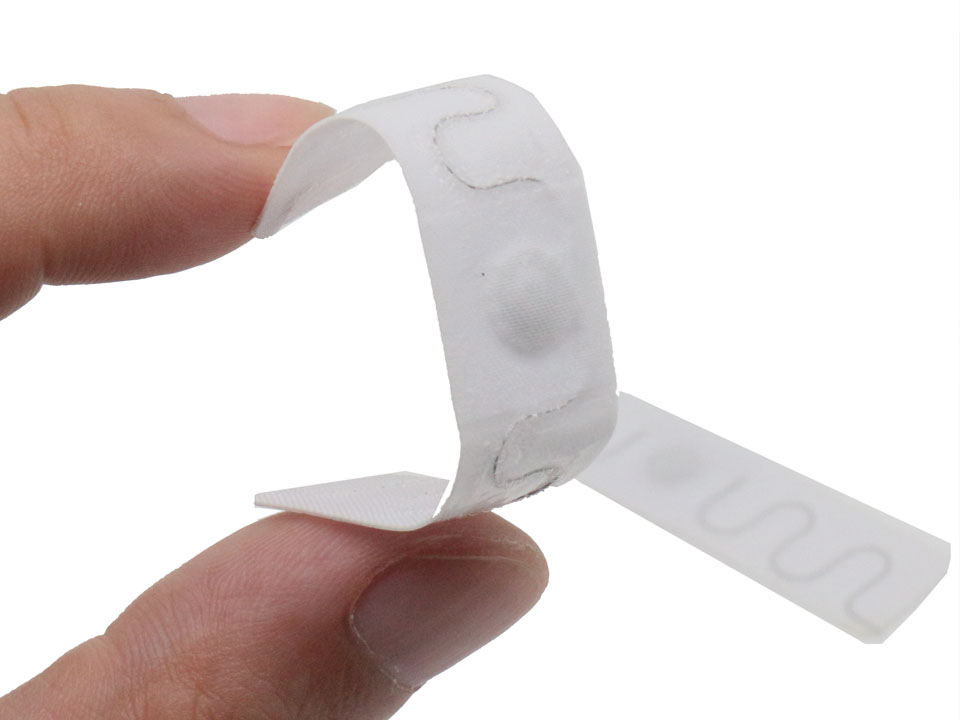
If the item is soft linen, uniforms, towels, or general commercial textiles, the safest starting point is usually a sewn or heat-sealed textile / fabric laundry tag. Your textile page positions these as washable tags for laundry ID and tracking, built for repeated wash, heat, and chemical exposure, which fits the standard hospital-and-hotel use case better than hard encapsulations.
If the project has a real need for both operational UHF reads and close-range HF/NFC interactions, dual-frequency RFID laundry tags make sense. Your dual-frequency page describes them as combined UHF and HF/NFC solutions for tracking and engagement, and that is the right niche: hybrid workflows, not default selection. I would not spec dual-frequency just because it sounds advanced. Extra complexity without a defined use case is how budgets get burned.
For uniforms and delicate items that need a softer, durable housing, silicone laundry tags are the more defensible choice. Your silicone category describes them as soft, durable, and heat-resistant for uniforms and delicate commercial linens. That is a fit decision, not a marketing slogan. Comfort, stitch integrity, and placement matter more than brochure adjectives.
And if the process is brutal—high heat, aggressive chemistry, hard handling—then PPS laundry tags for high-heat washing deserve a serious look. Your PPS page frames them as rugged, waterproof, and chemical-resistant for commercial linens, which is exactly where rigid encapsulation earns its keep. But rigid tags are not universal answers either; they solve one abuse pattern by introducing another set of attachment and comfort tradeoffs.
Chemistry and process still decide winners
The CDC’s global laundry handling guidance is refreshingly practical here: laundering effectiveness depends on time, temperature, mechanical action, water quality, pH, load volume, and soil level. The separate CDC infection-control guidance also notes that chlorine bleach can enhance laundering effectiveness but is not suitable for all fabrics. That is why I distrust any tag recommendation that ignores wash formula, finishing temperature, and attachment method. A tag does not live in a lab. It lives in your abuse.
The hard truths vendors usually leave until the second meeting
Read points beat read range
I have a strong opinion here: buyers ask about tag distance too early and process events too late. The better question is not “How far can it read?” but “Which event must be true, every time, for billing, replenishment, loss control, and exception handling to work?” Royal Jersey’s deployment mattered because it tied reader events to shipping validation, hotel receiving, and accounting. Einstein’s mattered because it tied movement data to cabinet replenishment and stock control.
Accountability changes behavior faster than training decks do
Portugal’s hospital deployment found a single employee hoarding 50 uniforms. That is not an edge case. That is what happens when inventory is effectively anonymous. Once every item has identity and every movement has a timestamp, “everybody does it” turns into “one person did it, on Tuesday, from this cabinet.” That is why RFID often feels politically uncomfortable inside organizations before it feels useful.
Sustainability claims need arithmetic, not slogans
The NHS-linked NOE CPC guidance from April 2024 says RFID can reduce manual counts, replacement costs, and carbon impact by improving inventory control. The Portuguese hospital case gave that idea some teeth by linking RFID visibility to lower laundering volumes and lower purchasing. So yes, there can be a sustainability upside—but only after the operation proves fewer turns, fewer losses, and fewer emergency buys. Anything else is branding.
Software is the system
This is the part too many engineering teams learn late. GS1 defines a RAIN solution as reader plus tagged item plus data management and action. In the field, Einstein used Smartxhub, Royal Jersey used HID Acuity with Sage integration, and Centro Hospitalar used Polytex software tied to cabinets, readers, and dispensers. The pattern is obvious: tags identify; software makes the ID useful. Without event rules, dashboards, user permissions, reconciliation, and exceptions, you do not have industrial textile tracking. You have a pile of serial numbers.
FAQs
What are RFID laundry tags?
RFID laundry tags are washable identifiers embedded in linens, uniforms, or textile assets so fixed or handheld readers can capture each item’s unique ID without line-of-sight, allowing software to count, locate, audit, and track usage history across soiled collection, laundering, storage, and redistribution.
In practice, that means fewer anonymous sheets, fewer guessed counts, and a far better chance of knowing whether a “loss” happened in the ward, the truck, the wash room, or the customer site.
How do RFID laundry tags work through an industrial wash cycle?
An industrial RFID laundry system works by assigning each textile a unique tag ID, capturing that ID at planned read points such as intake, wash loading, packing, dispatch, and storage, then turning those read events into software records for count verification, replenishment, exception handling, and life-cycle reporting.
The tag is only the passport. The border crossings are the readers, and the real authority is the software that decides what each read means.
Why are industrial RFID laundry tags different from consumer NFC tags?
Industrial RFID laundry tags usually rely on passive UHF RAIN RFID standards for bulk, non-line-of-sight item identification across operational spaces, while consumer NFC uses HF technology at 13.56 MHz for very short-range, one-item interactions such as payments, ticketing, and phone-triggered content access.
That difference is not academic. One architecture is built for carts and cabinets; the other is built for taps and phones.
Do washable RFID tags survive heat, chemistry, and repeated laundering?
Washable RFID tags are purpose-built textile or encapsulated identifiers selected for repeated exposure to laundering stresses such as heat, mechanical action, water chemistry, and process handling, but real survival depends on tag construction, attachment method, fabric type, and the operation’s actual wash formula rather than marketing claims alone.
That is why serious buyers test by garment family and wash environment, not by asking for a single universal sample and hoping it fits every abuse case.
What should an operations team validate before launching a pilot?
An RFID laundry pilot is a controlled operational test that should prove which read events matter, where exceptions occur, how software reconciles counts and movements, which textiles need which tag constructions, and whether the resulting data changes labor, losses, purchasing, and par-level decisions enough to justify rollout.
My advice is simple: define success in numbers before the first tag is sewn in. No buyer should accept “better visibility” as a pilot outcome.
Your Next Steps
If you are evaluating vendors, stop asking for a miracle tag and start asking for a process map.
Build the shortlist around four things: where each read event happens, how the software handles exceptions, which textiles need which tag constructions, and whether the reporting can prove lower losses, tighter par control, and cleaner replenishment logic. Use your own catalog intelligently: start broad with RFID laundry tags, narrow soft goods into textile / fabric laundry tags, reserve dual-frequency RFID laundry tags for true hybrid workflows, and match harsher environments to silicone laundry tags or PPS laundry tags.
And one last hard truth.
If a vendor cannot show you where the data is captured, where it is reconciled, and where it changes a manager’s decision, they are not selling an RFID laundry management system. They are selling a demo.